Saturday, October 29, 2005

sentinels


The open farmlands of northern Illinois would not be the place for you if you're one of those people with a phobia of open spaces. For me fear lies in crossing bridges over open water. The vast spaces of the wide open prairies holds stark and simple beauty.

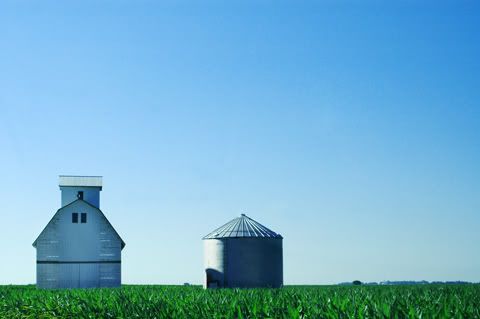
Two grain storage buildings stand as silent sentinels, stark geometric shapes standing guard at the edge of a thousands acres of corn in Big Rock.

Thursday, October 27, 2005

wind power


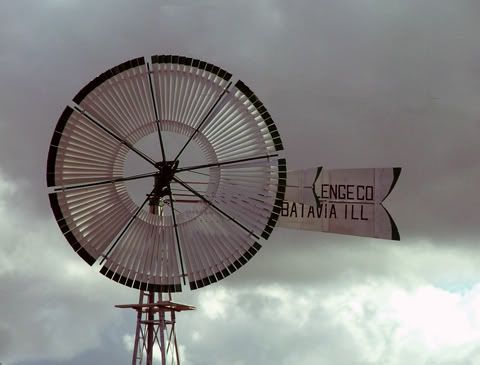
Back when wind was a major power source, Batavia, Illinois served as the center of windmill production. Plants hugged the shore of the Fox River and windmills fueled the economy.

The Batavia dam is crumbling and the old factories house newer technologies. Old restored Batavia windmills, and reproductions have been popping up as decor at local restaurants and shopping centers, paying homage to the towns history.

Wednesday, October 26, 2005

blue sky - barn red


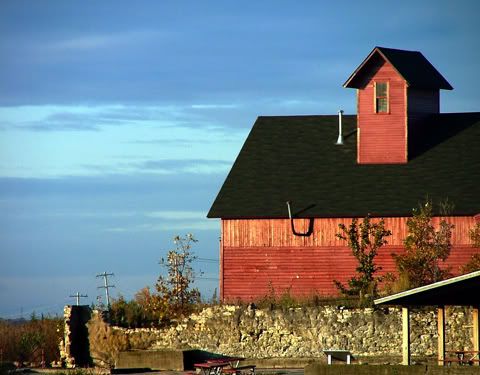
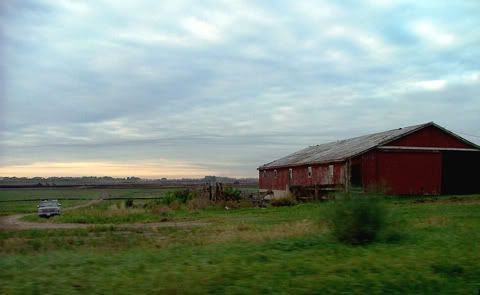
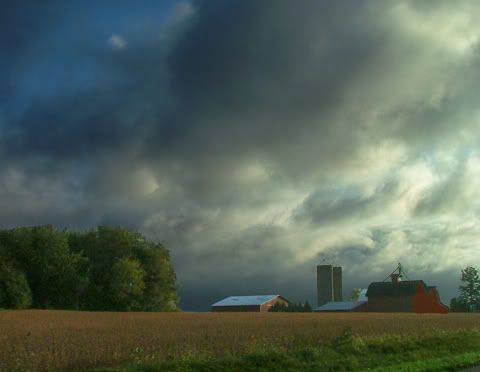
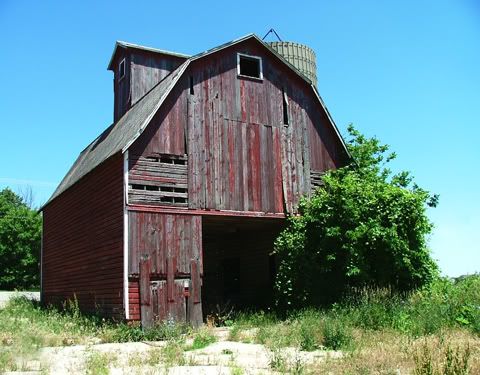
Unlike the filtered light of winter, which produces pastel tones of pink and blue, the light of fall is strong and clear, producing saturated scenes. Blood red barns decorate the countryside, competing with the blast of fall colors in the nearby forest. All are putting on a show, one last performance before winter tosses her grey coat over the countryside.

Tuesday, October 25, 2005

organic form


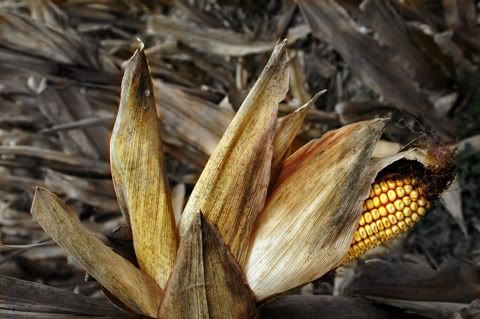
Photographer friends drove out from the city yesterday and we spent the afternoon navigating a corn maze. With civilization creeping closer and closer some of the farmers and businesses are dabbling in "rural tourism". The pumpkin farms have long been successful but some enterprising person planted a corn maze and the craze has taken off.

The day was grey and dreary, not making for good photographs, but I found a while back that when the sky is grey objects under the canopy of trees (or in this case cornstalks) photograph very well. So, I took to crawling around, looking for surprises Mother Nature had created. This lovely form was one treasure.

Sunday, October 23, 2005

entrepreneur


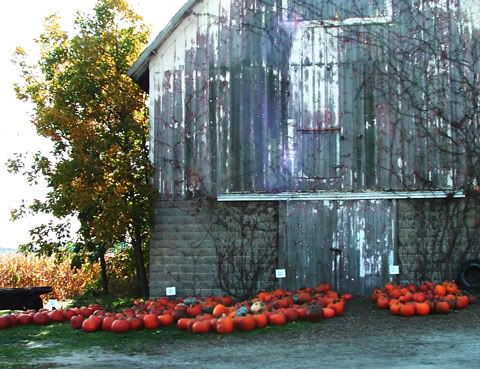
All you need to go into the pumpkin business is a small piece of land and some pumpkin seeds. Most small roadside pumpkin stand are on the honor system. This person had the pumpkins marked with little signs, and you simply leave the money in a box.

Likewise, the fresh egg businesses. One farm wife has a refrigerator next to one of the outbuildings. You take the eggs out of the fridge and leave the money in a container. It's called trust - it works.

Saturday, October 22, 2005

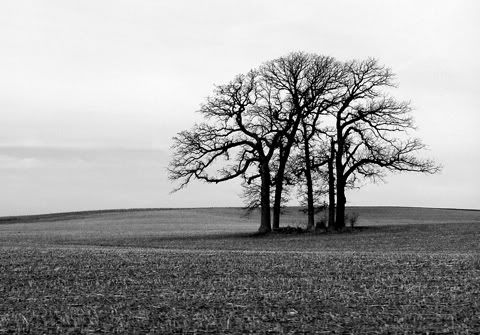
lonely tree


It occurred to me that I hadn't yet subjected you to a "lonely tree" photo. Well, it's about time.

This, of course, is technically a "lonely trees" photo, but since their standing with their arms outstretched and holding hands, we'll view them as one entity.

Critics will say of course ..... trite - yeah, don't care.....lacking tension - it's in the middle of nowhere, no tension in this spot.

Please enjoy the trite lonely trees. I love 'em, got a million of these shots. Gotta love a lonely tree.

Friday, October 21, 2005

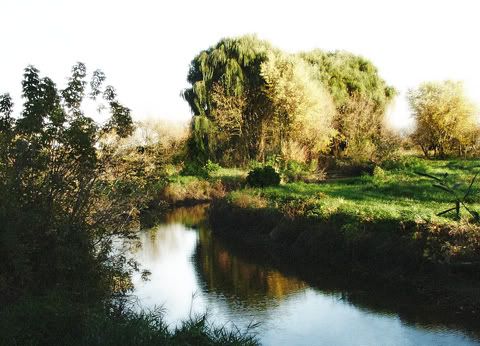
mill creek

The first time I featured Mill Creek, on May 3rd, the willows were leafing out. This is perhaps my favorite spot in the surrounding area. I has almost a storybook feel to it. Streams are usually hidden, meandering along in the massive farmland, only crossing rural roads at a few points. The sad part is that if you mention Mill Creek, 99.9 percent of the population will think only of the huge McMansion community the developer named after the waterway. Mill Creek doesn't exactly lead anywhere, but from the nearby Fox River it would be possible for me to reach the Illinois, and on to the Mississippi and the Gulf of Mexico. That's a lovely daydream for the armchair river runner.

Thursday, October 20, 2005

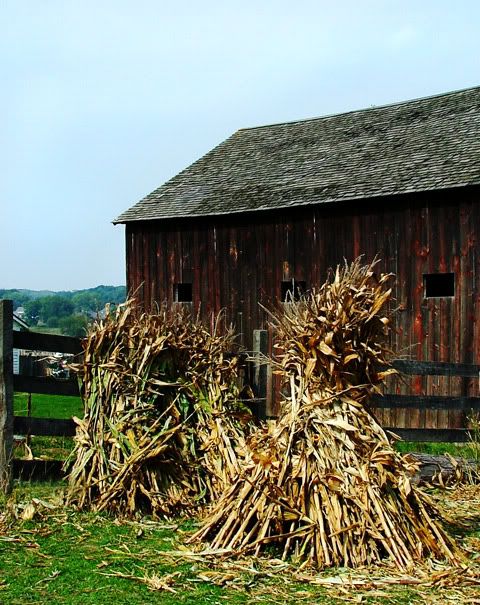
shocks


Nothing says fall to me like shocks of corn stalks. You only see them nowadays bunched around mailboxes in fancy subdivisions, tastefully arranged displays with pumpkins and scarecrows from the local craft store.

Every fall the Chicago Tribune publishes a old piece of artwork called "Injun Summer". In the first frame a grandfather and his grandson look out over the field, with corn shocks standing and a low mist rising. In the next frame it's twilight and the scene transforms. The shocks are teepees and the mist is smoke from the campfire and Indians dance around the fire.

Wednesday, October 19, 2005

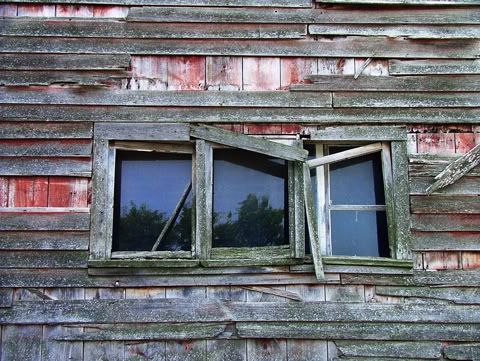
archaeologist


Wind and weather work together as natural archaeologists, removing a layer to reveal the original boards of the old barn. Strangely, the vertical boards have no battens, as is traditional in barn building. The horizontal siding is curious and since this is a very large barn, leaves one wondering how many board-feet were required to clad the structure....and why.

Tuesday, October 18, 2005

harvest


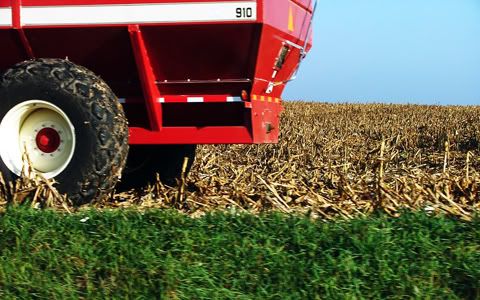
It's harvest time in the midwest. Many of the fields were plowed under or cut down for silage a month ago. Some of the fields held on and will produce a crop albeit with diminshed yields.

The big machinery scoops the corn between the metal fingers, passing it back along the mechanical guts. Dark golden kernels of corn travel up a conveyer and deposited in a trailer. Then it's off to the silver minarets - the grain elevators.

Monday, October 17, 2005

coal train


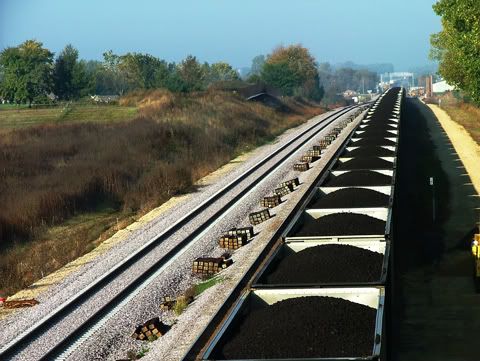
No, not the musician, but the real coal train, running east towards Chicago, passing through tiny LaFox, Illinois every morning just before 8 a.m.

Stacked between the tracks are the railroad ties for the new rails on the left. This is the new line bringing commuter trains further west, forever changing a way of life, as did the railroads many, many years ago.

Sunday, October 16, 2005

abandoned


Another abandoned property, soon to be blanketed with "Big Homes - Less Money!" as the advertising claims.

First appears the surveyors, not far behind the silt masters....black plastic fencing running sometimes for a mile or so. Big machinery comes in to scrape off black topsoil, thousands of years in the making.

faith


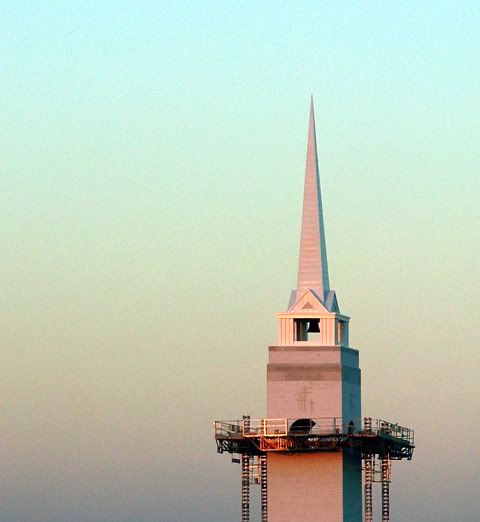
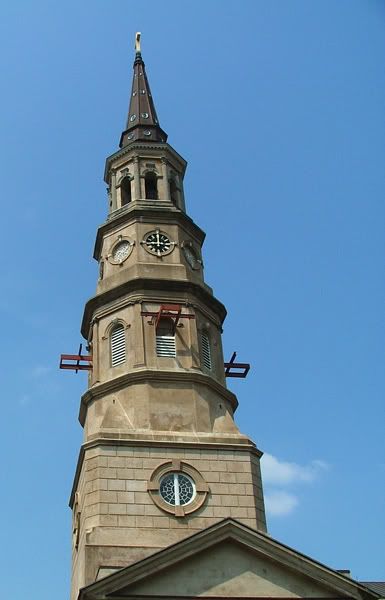
The First Baptist Church of Geneva has such a burgeoning membership they've created a "west campus". The church building itself resembles, as I've mentioned before, a junior high school building. After finishing the church building and parking lot, workers launched into the construction of the bell tower. The work looked fairly dangerous to me as masons labored on scaffolding that literally reached to the heavens. The bell tower is quite high, and of course it looms over the pancake flat countryside.

At the end of last week the spire lay on its side in the parking lot and it appeared that parishoners were placing something inside - a time capsule perhaps? And then....whoosh, a large crane lifted the structure to the top of the tower.

Friday, October 14, 2005

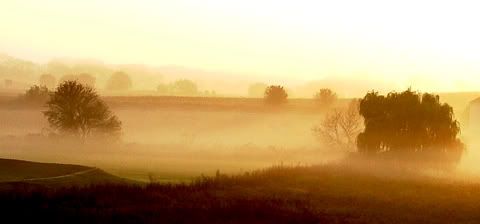
fall


This is fall in the midwest.

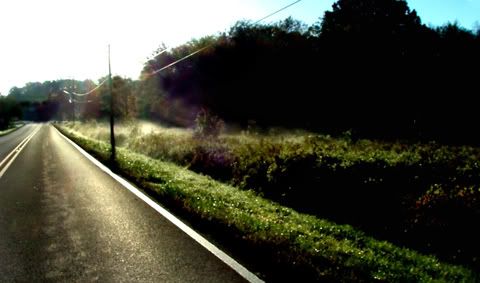
Foggy, misty mornings, sunlight and water droplets conspiring to create a mystical landscape.

This represents my morning commute.

Thursday, October 13, 2005

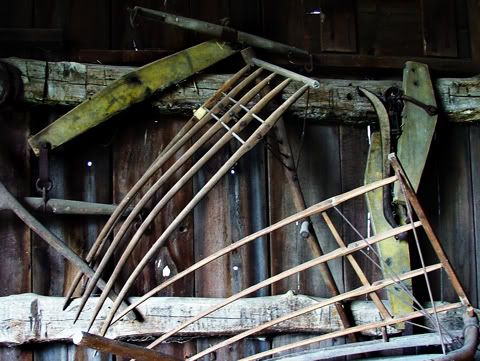
implements


Most old barns have a tack room, and a place to store implements. There's no reason to get rid of them, and besides where would you take them? There were no dumps back then, and anyway, you never know when the new-fangled equipment might break down.

Each time I enter one of these old barns, I'm reminded of the scene in "Twister", where they seek refuge in the barn, only to find the walls lined with items that look like tools of torture. There were in a way, as hand and oxen powered farming was hard physical work.

Wednesday, October 12, 2005

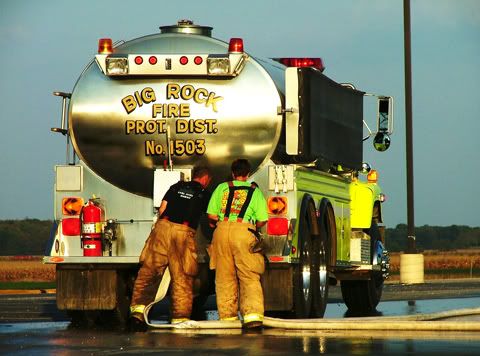
volunteer

This is the crew from Big Rock, Illinois, helping to fight the horse barn fire. Out in the countryside most of the fire departments are volunteer. Our small towns and villages do not have the tax base to support the manpower for a fire station. So these people, including farmers, construction workers, mechanics, high school teachers and others put the time and their lives on the line. Fire departments from all the surrounding areas helped on this fire. And just so you realize, there's no source of water except for what they carry in the truck. The high school that was about 2 miles from the fire has it's own water tower and hydrant, so the trucks were ferrying back and forth to fill up. As soon as these guys filled up, the next truck was waiting in line. Using that method you'd be surprised how quickly they struck the fire.

Tuesday, October 11, 2005

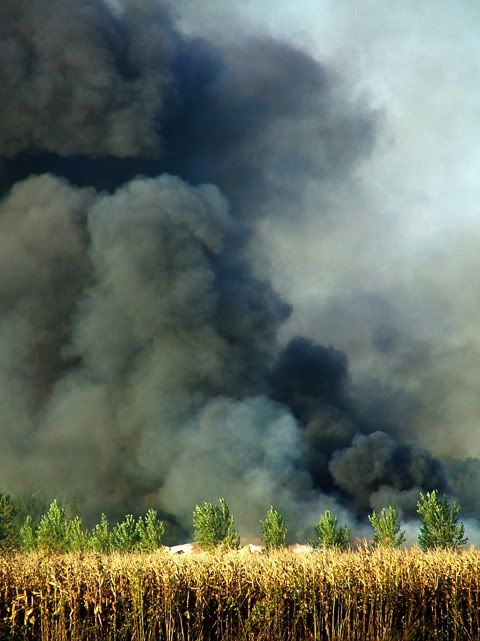
fully involved


On the way home from work last week I noticed a slight smudge in the sky. That could only mean one thing - fire. I was headed toward R.F. Houtz's to get my tractor tire repaired and knowing that the only structures in the westerly direction included the high school and some farms, I made the decision to investigate.

There's always a camera, or two or three packed in a backpack in the trunk. Unfortunately the "big gun" with telephoto lenses was back at the ranch, batteries being recharged.

From the time I spotted the slight grey smudge until I arrived on the scene was only about 3 miles and 5 minutes time. There was no way getting closer, the small country road was blocked off and starting to clog with small town volunteer fire departments (more about that later). Everyone be in awe of my drive to get the shot. I marched about 3/4 of an acre into a really rough field in really bad shoes.

The corn was high enough (in it's pathetic state) to obscure the large horse barn that literally became this fully involved in about 5 minutes. There are no speculations yet as to the cause of the blaze, but 31 horses were killed. Hay stacked in a barn can reach an inner temperature to ignite, but we will see what the investigating ATF has to say about it.

Fire is a dangerous and awesome, and wickedly beautiful power. I think that man cannot even dream of the power that mother nature is able to unleash. In the days of pioneers a prairie fire was an unspoken terror.

Monday, October 10, 2005

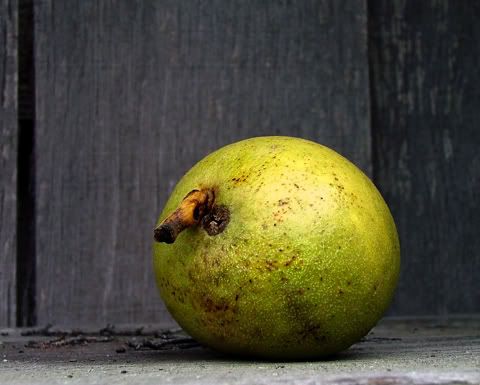
green jewel

This still life study is a walnut. I'm not quite sure if it's an English or Black Walnut and must admit that I knew nothing about how walnuts grew. About 30 of these were lying under a tree at Garfield Farm Museum. A young school-age volunteer grabbed one up and split it open, explaining that inside this hull was a substance that would stain everything black. This is the size of a large lemon, so you can understand why a bag of walnut meats is so expensive.

Thursday, October 06, 2005

gone fishing....again


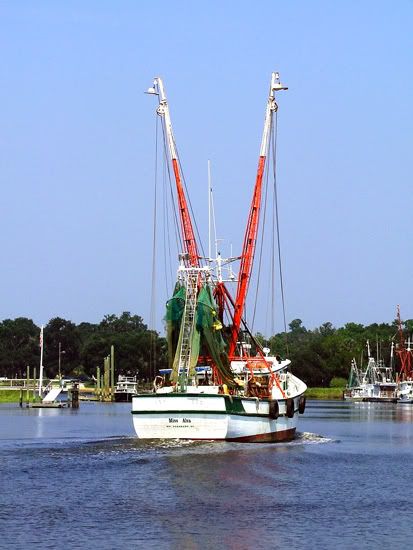
I'm leaving tomorrow for Maryland. Going fishing for some crab. Or is it crabbing for some crab? This picture was actually taken off the shrimp boat docks in McClellanville, South Carolina one of my other "gone fishing" adventures.

I'm meeting up with some old friends in Baltimore and we're going to eat all the crab cakes that we can find.

Perhaps I'll find some interesting things to photograph out east. You never know.

.....later.

R.F.


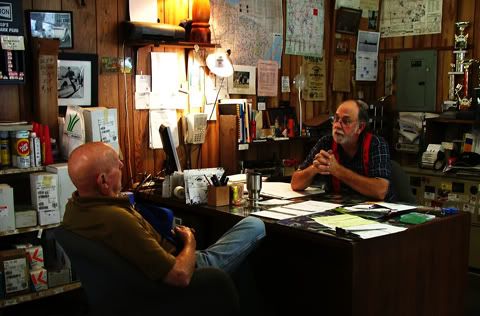
Here's one good thing about the country. This is R.F. Houtz and he owns the local small tractor dealership in the next town. I had arrived at lunch time looking to have my tractor tire repaired.

Houtz's closes down (well, sort of) around lunch time, to eat and play cards. This local gentleman had dropped in, not to buy a tractor or schedule a repair, but to talk. Sometimes that's how business is done around here. Sometimes it's not so much business as maintaining relationships.

Houtz just came back from a dealership convention, where they told him the secret to future success would be to provide the new customers (a.k.a. multi-million dollar homeowners moving in) with a shiny showroom, clean floors, beautiful lighting and snappy organization.

I don't know.....I've been doing business with Rob for 12 years and his operation is just fine with me. It may look unorganized, but he knows where everything is. He has the patchwork of carpet cleaned every year, whether it needs it or not. The lighting.....mood lighting, I say. And I'm pretty fond of the 1950's lamp on a shelf over his desk. The printer could use a little dusting though.

On the subject of maintenance and repair my thought process runs like this - I don't trust a repair shop that is sleek and sexy. They don't repair things in a place like that, they simply replace "units" or switch out complete systems.

Here's how business was conducted this day.

"Rob, I need this tire repaired."

"OK, pick it up in an hour."

"I gotta get back to work and I don't get off until 5."

"Well, I leave the tire by the front door here...just slip a check for $20 under the door."

"OK, good doing business with you."

Without an aggressive business plan, without dog-eat-dog salemen, without a slick operation, and with locals using his place as a kind of gathering place - many times not buying a damn thing, he's made a living for himself and put a kid through chiropractic college.

I won't belabor the point, but that's why we moved out here. And I can't be happy about the changes that are washing over our area. R.F. will retire, and the tractor dealership will one day resemble a Porsche showroom.
the watched pot


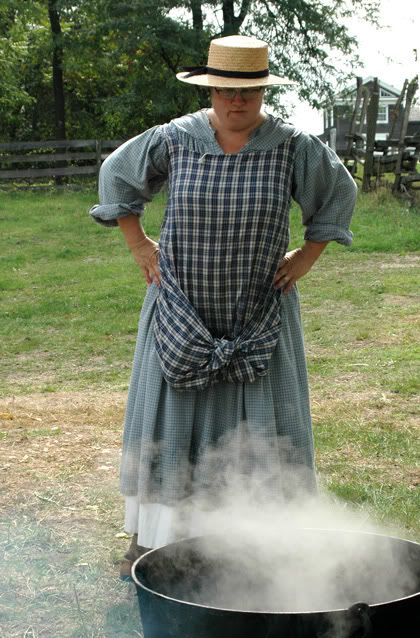
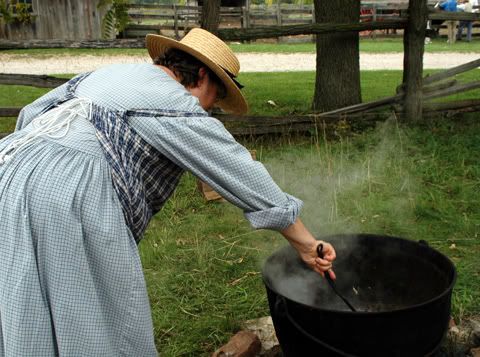
Who says a watched pot never boils? If you put enough wood on the fire it will.

The chicken fricasee looked pretty darn good, but perhaps because we were outside, there wasn't much aroma wafting around. Windy...it's near Chicago, you know.

chicken fricasee


It was a very warm Injun Summer day, too warm for cooking chicken fricasee outside in the yard, but that's exactly what this volunteer was doing. I'm sure the chicken in the pot was from the local food store and not one of the museum farms rare breed Java chickens. They were safely tucked in the hen house busy laying eggs.

She did have some beautiful root vegetables displayed on the table, dug up from the small ktichen garden behind the inn.

Wednesday, October 05, 2005

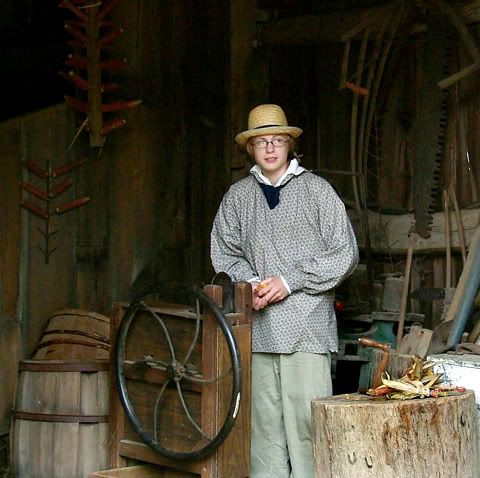
corn sheller


Early settlers could only work a piece of land that was matched in size to their ability to do the work involved. They first engaged in subsistance farming, producing just enough crop to support their livestock and their family.

New inventions allowed them to reduce the time needed for each chore, and this increased the size of land they could farm and crop they could process, creating a surplus. The surplus allowed them to move from subsistance farming to the marketplace.

This young volunteer (you gotta love kids that get involved in history) was operating a corn sheller. The whole corn cob was fed into the top, the wheel turned by hand which stripped the corn, feeding it into a box, and tossing the bare cob into a barrel.

I had my eye on those corn cobs. I'm fixing to whip up a batch of corn cob jelly!

red hot


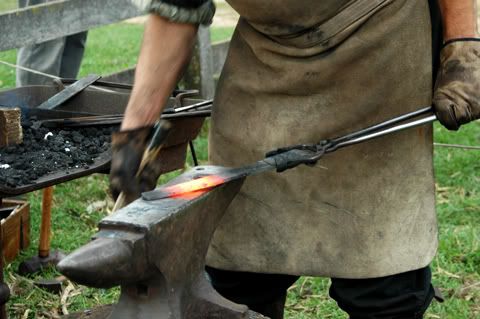
Clank....clank.....the blacksmith's hammer make a distinctive sound as hammer strikes red hot metal. This seemed to me to have an element of danger, the heavy hammer and the glowing metal capable of causing harm. The blacksmith and his assistant were engaged in a conversation about how they would never shoe horses because of the danger! I had to laugh at that statement in light of their occupation.

smithie


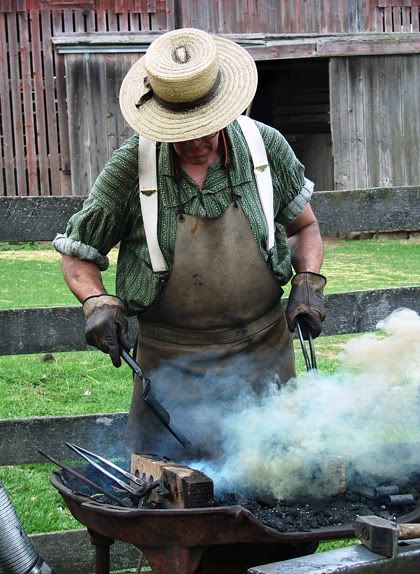
No, he's not barbecuing bratwurst. This blacksmith works his trade at Garfield Farm Harvest Days. Heat and muscle transform a piece of metal into matching gate hinges. He was using coal as a fuel and had an assistant who was cranking a hand operated bellows.

Tuesday, October 04, 2005

evoking the past

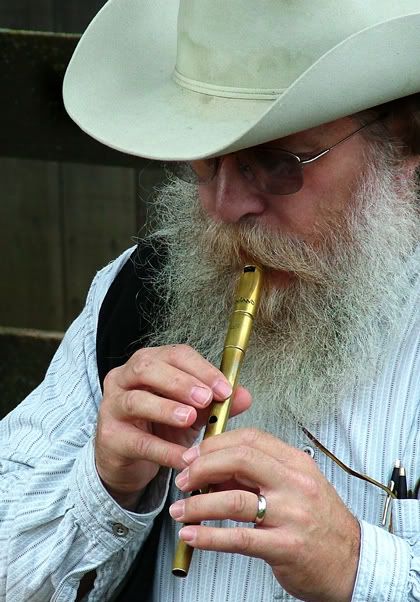
Accompanying the young musician with the fiddle and mandolin was this man, using the simplest of instruments, a small flute. I know nothing about these things, but this sounded like those Irish flutes you hear in celtic recordings. It was lovely and simple and seemed to harken back a to a time when immigrants brought their music culture to their new homes. Many thanks to this volunteer for giving of his time and talent.
whiskey for breakfast

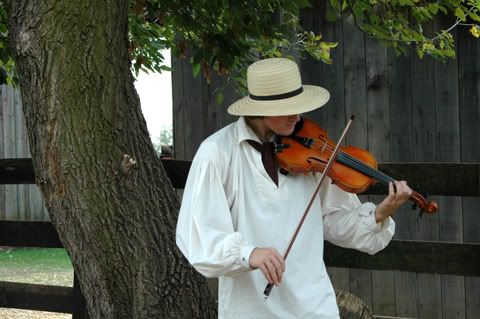
The young musician was playing an especially haunting tune. The blacksmith's assistant, working just to the right said, "I can play that tune, it's Whiskey for Breakfast." I'll take his word for that. Garfield Farm Museum is a large operation, lots of livestock, barns and outbuildings, gardens and the Inn which is a museum house. All this is run with only two full-time employees and as you can imagine, an army of volunteers. Some of the volunteers commit to daily tasks, and some volunteer for special occassions. The music was very lovely and simple... old tunes performed using only two instruments. It's a very clean sound. Simply lovely.
Sunday, October 02, 2005

pottawatomie


For the next week or so I'll share the photographs taken today at Garfield Farm Museum's Harvest Fest. This wonderful operation is run by two full-time employees and an army of committed volunteers. There were lots of wonderful photo ops, and hopefully I captured some of interest.

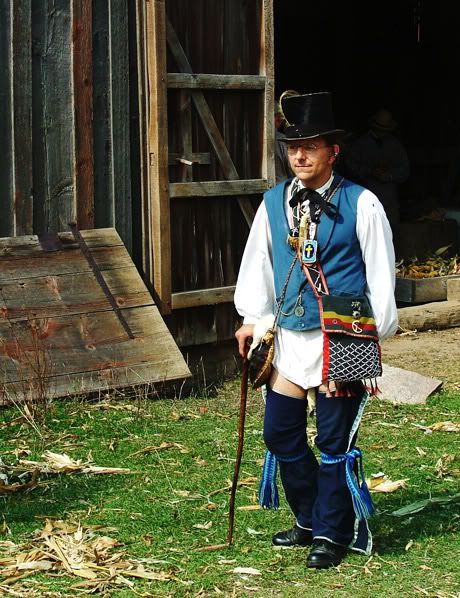
This gentleman was dressed as an acultured Pottawatomie indian. I was quite surprised to find as this man walked away from me, that his upper legs were actually naked. He was wearing a loin cloth and some very different half-pants.

Indians, including my great-grandmothers tribe the Seminoles, acquired bits of culture as they were exposed to white settlers. They pick and chose which dandy clothing items to incorporate into their wardrobe. In the case of the Seminoles, who were originally Creek indians, included bits of Caribbean and Cuban elements, since they traded heavily with those people. Seminoles sported turbans and silver gorgets.

This gentleman wears a hat, a Christian cross, silver coins and more. The Pottawatomies inhabited the Fox River Valley before being forced west by the advance of settlers.

faith


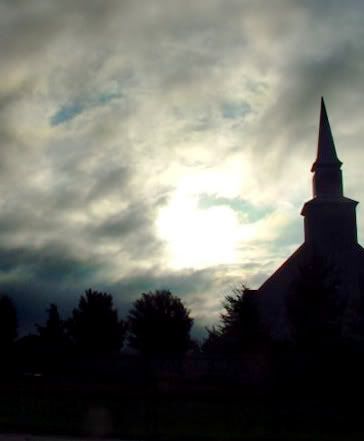
The steeple of the Congregational Church is silhouetted against a stormy sky. This is a newer church, larger in design and scale than the small country houses of worship. It stands at the edge of community of upscale homes. These churches have large congregations and are financially able to support the large buildings. The small country churches continue to struggle with maintenance and upkeep.

Saturday, October 01, 2005

garry


The thing about living in a small town is that you know just about everyone. That can be good and that can be bad. There's an intertwining of personal stories, a complicated interweaving of lives and relationships. Even if you don't know a person, chances are there's only one or at the most two degrees of separation.

It was a clear, beautiful morning, and on my way to run some errands I stopped at the Lily Lake Cemetery which stands at the top of a small rise at the edge of our small town. The highest point is at the back where the narrow paved path turns to curve back down to the road.

I stop and visit Cody's grave now and then. He was a high school friend of my daughters who was killed in car accident. I walked around and looked at the names on the headstones, all familiar - Eckstrom, Hanson and other names that represent founders of this farming community.

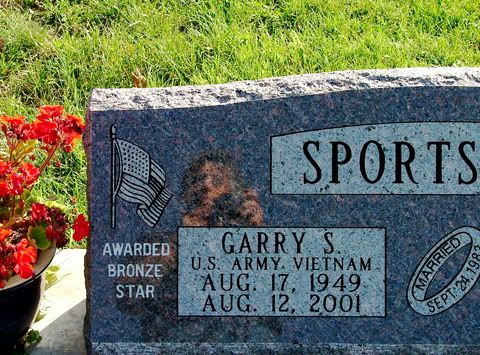
I spotted "Sportsman". I didn't know that Garry was buried here in Lily Lake. He was a co-worker of mine, a wonderful man. Garry was one of those guys who worked with a smile on his face (he was the maintenance man at our office building). He never complained, and was what you would say a quiet, simple man.

And here on his headstone was something I never knew about Garry. He served in VietNam and earned a Bronze Star. He was an honest and hard working man.....and he is missed.

Friday, September 30, 2005

clockwork


Just like clockwork the Union Pacific coal train passes through the area twice a day, heading east. The empty coal cars head back west each evening.

The railroads were a make it or break it element for many small towns. In one rural area a huge courthouse was built with the thought that the railroad would bring a booming economy with it. The rail line was finally laid down, much further south and the huge courthouse was left as a ghostly monument to a dream that never came to be.

Thursday, September 29, 2005

bovine models


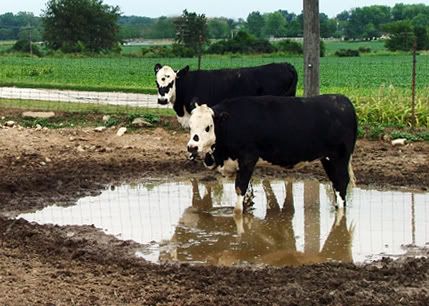
If you're searching for a good photographic model, look no further than a dairy cow. If you approach within 100 feet, they will turn to face the camera and stand stock still for at least 4 minutes. This allows you to make camera adjustments, change lenses, focus and take plenty of pictures.

At this point they go into motion....slow motion... ambling, sauntering, poking along to where you stand. Perhaps they're looking for a treat, although dairy cows are not normally offered treats in the manner of thoroughbred race horses. When they're determined you have nothing of interest for them, they move on....over to the mud puddle where the hog is wallowing.

In general, they are animals of good disposition, although occasionally one of them will get into a snit. I witnessed one who decided she'd charge across the milking room and attempt to jump through the barn window. What a mess that was. Have you ever tried to pry a cow out of a window frame? Don't try that at home.

Wednesday, September 28, 2005

misty morning


Summer is officially over and mornings are marked by blankets of crystal clear dew covering the landscape. Sunrise produces the clear and intense light of fall and mists rise from low lying areas.

Soon the dew will transform itself to crystalline frost. There are scenes of incredible beauty all around us. Unfortunately for me, alot of these scene lie in areas inaccessible for methodical photography - - no shoulders on the road to pull off and compose a shot. I am left with what I'll call "stop sign photography", out the side or front window of a car. "Stop sign photography" is somewhat of a misnomer, because many times I'm not stopped. It's a special form of photography involving framing the shot blindly and using a special skill that involves pushing a button with the right hand and driving with the left. Don't try this at home, and as always, do as I say not as I do.

Monday, September 26, 2005

weather


One of the best things about living in rural northern Illinois is the ability to view entire weather systems as they pass through. With nothing but sky from horizon to horizon, it's hard for a thunderstorm to sneak up on you.

Although Montana is know as the "big sky country", perhaps we could be known and the "also pretty big sky country".

This was taken this morning as the sun was rising. Pretty awesome sight to behold.

Sunday, September 25, 2005

faith


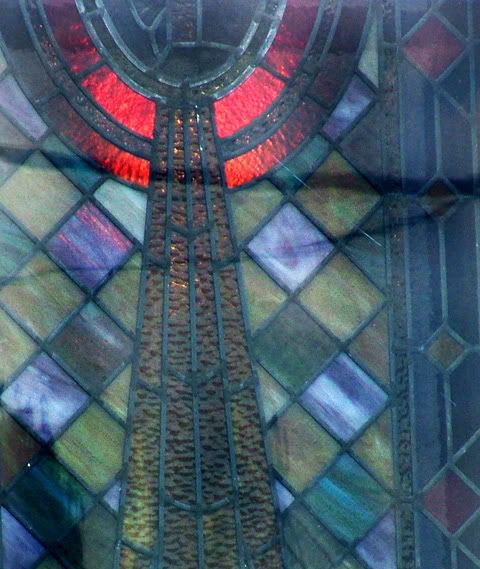
Light streaming through windows on the opposite side of the church illuminate the stained glass from the inside out.

The artisans who created windows throughout the midwest are long gone, and intricate glass work seems to be a thing of the past for new church construction, except for the larger and more financially secure faith communities.

Newer churches in the area resemble more of a multi-purpose middle school gymnasium.

Saturday, September 24, 2005

drive-thru


Long before Mickey-D's offered up the concept, farmers operated drive-thrus.

This is a drive-thru corn crib, now abandoned. The farm machinery would drive in one side and stop inside the crib. There were mechanisms that transferred the corn up a vertical conveyor system, and then the tractor would drive straight through and out the other side.

There's still a chair sitting inside, next to the machinery mechanism.....as if the farmer intended to return to his work anytime. Unfortunately this structure will soon be destroyed. Currently it's home to feral cats and raccoons.

Friday, September 23, 2005

ribbon of road


I've been told by visitors from a more diverse countryside that our pancake-flat fields of corn and soybeans, reaching from horizon to horizon, can be disconcerting. Someone from Oklahoma told me, after we drove through a gaunlet of 10-ft. high corn fields, "I've got to get out of here, it's way too green!"

I didn't know it was possible to be too green! I do know that when that when settlers reached the edge of the forests and faced the immense expanse of the great prairies, they gave pause before stepping into that great unknown. Some women actually stood their ground and refused to take another step, the great sea of prairie threatening to swallow them up forever.

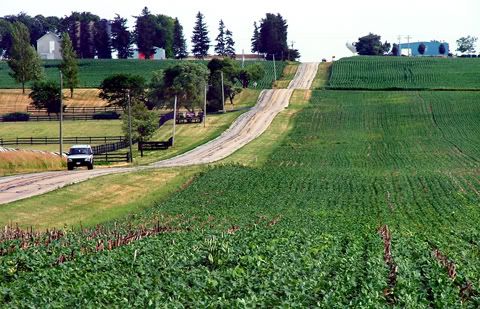
Any slightly hilly stretch of road is an interesting and welcome break from the monotony. This is a lovely field of soybeans, back when there was some hope that the crops might somehow survive this summers drought.

Wednesday, September 21, 2005

farm stand peaches


The summer farmstands will be in business through the fall, when they will be selling pumpkins, squash and Indian corn.

All it takes to set up business is some type of shelter, in this case some sawhorses, boards and umbrellas. And of course a truck to get the produce to the market. This stand featured peaches, although they are not grown locally. The operators of this stand were buying at the wholesale produce market. No matter, the peaches were awesome and we finished them before evening.

Monday, September 19, 2005

tour de soybean


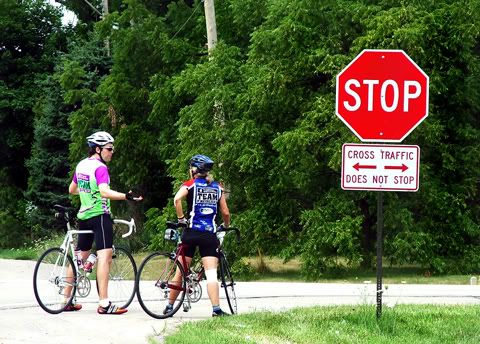
We're close enough to major civilization that the backroads have been "discovered" as a venue for bike training and races. Evenings and weekends the backroads are crawling with Armstrong wannabes.

I don't mind if people want to have a hobby but this endeavor, as I have alluded to before, is a tragedy waiting to happen. The speed limits on the roads are fairly high, since it is unpopulated and open, but many of the roads have blind turns and hills and dips..... and there is no shoulder. The racers ride in the narrow roadway and they outnumber deer, coyotes and stray livestock by hundreds to one.

I don't what the answer is, but I feel less than welcoming to someone who puts their life and others in danger.

Sunday, September 18, 2005

fields on fire


Dusk is my favorite time of the day. The setting sun seems to set the fields on fire, and my car blazes a black trail along the edge. Unfortunately, these fields of corn are beyond hope. Harvest would normally take place in late October or early November, but the farmers have given up and are cutting the fields to at least get some silage. Very pricey silage at that. A years crop gone.

The old trail is still visible up to the small grove of trees. This is where the farmhouse once stood. Not many in this nearby community remember the house or outbuildings. They're the newcomers who are the first wave of the 23,000 homes that will be built here in the next few years, and not much interested in the history of the community. That is what I find most sad. Progress will come, development will have it's way, but let's not forget our history. That history is rich and meaningful.

faith


St. Mary's Catholic Church looms over the rural landscape. Flat, flat, flat everywhere you look....nothing but corn and soybeans as far as the eye can see. St. Mary's stands at the edge of the town of Maple Park, which is a very small town. The church seems out of place in its surroundings. The building is on the scale of churches in downtown Chicago.

I've never been inside, but can imagine that the stained glass windows are breathtaking.

Friday, September 16, 2005

shrine


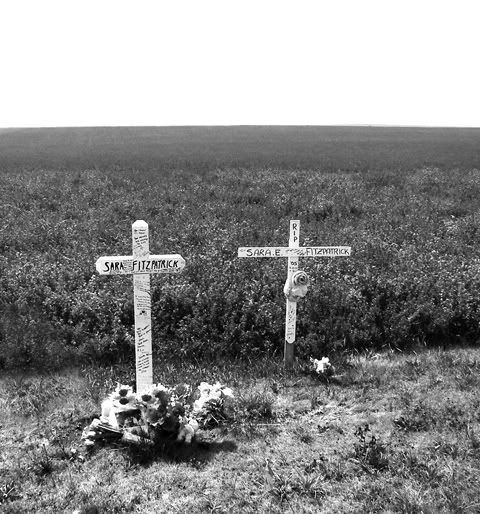
Handmade roadside shrines are all too common on lonely country roads. It's hard to understand how so many can lose their lives on such untraveled pathways.

This display seemed particularly sad in it's desolation at the edge of a beautiful field of alfalfa. The crosses are maintained for awhile, flowers left at the site. But years pass, and the crosses are degraded by wind and weather.

My daughters friend Cody was killed 7 years ago on Thanksgiving eve. The tree he struck has returned to it's natural state, the markers are gone. The spot is marked in our memories and when we drive down the road the memories return.

Thursday, September 15, 2005

observation silo


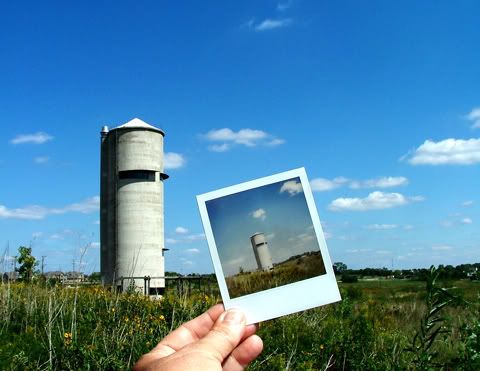
Pieces of the old country take on new lives as civilization moves in. Visionary people who seek to preserve a bit our history work hard to set aside land, and resources to maintain properties such as Peck Farm Nature Center.

One of the old barns has been converted to an interpretive center where visitors can view a short movie, the beautiful old Italianate farm house has been converted to offices for the overseers, and the old silo is now an observation center.

Three stories of circular staircase carry you to the top which rewards you with a breathtaking view of the area that has been set aside as a nature center. I am thankful for the large community of preservationists who work hard to maintain these properties.

I am also thankful for whoever came up with this photography genre. I like it - - and picked myself up a cheap polaroid in order to experiment. By the way, the view from the top is awesome!

Wednesday, September 14, 2005

fleeting beauty


There are artists who work in impermanent media, such as native artists who create intricate sand paintings, which exist only for a short time and then are left to wind and weather. You wonder how someone could invest so much work and concentration and then leave the art to certain destruction.

Mother Nature creates her own fleeting beauty. This moonflower vine blooms in my secret garden. An early morning bloom will be shriveled by the next morning. It puts on a beautiful and short lived show.

Tuesday, September 13, 2005

corn boil


Summer around here means a flurry of festivals in the nearby towns. The "highly civilized" fests are making inroads, such as last weekends Festival of the Vine, a wine tasting/wine selling extravaganza that seemed to be as exciting as a three-day old helium balloon.

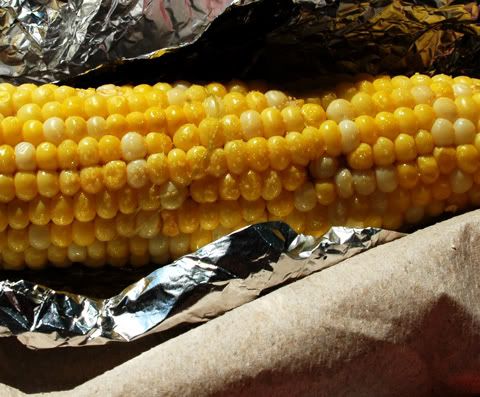
The king of festivals around here is still a race between the corn boils/cornfests/corn roasts and the pumpkin fests in the fall. In my book nothing beats a good corn boil.

Here's the food of the Gods from the Sugar Grove Corn Boil a while back. Notice the delectable sweet goodness topped with the just the right topping of butter and salt. The corn boil at the Steam Powered Threshing Bee featured the exotic addition of pepper. My personal favorite is roasted corn, and here's our recipe: Invite lots of friends and enjoy.

Roasted Sweet Corn

Large bushel of sweet corn
Large plastic garbage container with lid (NEW)
Heavy rock
Empty coffee can
3 lbs lbs of salt
3 lbs of butter

Early in the morning, or the previous evening, fill large container with water, add salt and stir vigorously to dissolve. Add the bushel of corn (un-husked) cover with lid and weight the top down with a heavy rock. Let stand overnight or all day.

Light the grill, and get the coals nice and hot. Put butter in the coffee can and position toward the side of the grill to allow butter to melt. Start taking corn out of the water and allow to drain. Put the corn on the grill and turn as husks get brown.

Peel back the husks, creating a handle to hold the corn. Dip into the coffee can of melted butter. Salt and pepper to taste. Provide lots of hand towels.

Enjoy!

Monday, September 12, 2005

a new perspective


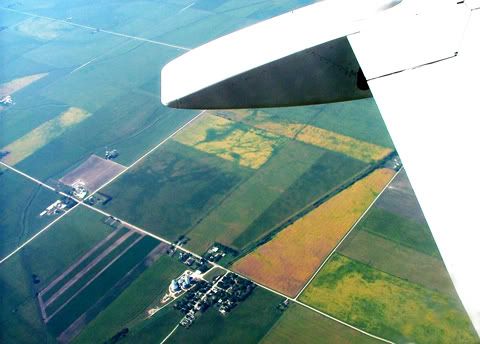
Someone once told me, "It's always a sunny day at 30,000 feet", and that's true.

The most interesting thing about flying over the country, especially at lower altitudes, is that you can study the landscape. This trip revealed the nature of farming in South Carolina. Large areas of treed landscape is punctuated here and there with a field tucked in small spaces. Flying over our Illinois corn and soybean fields is another matter. The land is divided into large squares, uninterrupted by any other feature other than rivers and their attendant shoreline trees. Near the corner of each square is a farmhouse and outbuildings, and perhaps another house in the center vertical axis.

It looks open and lonely from the air, the soybean field turning into a piece of rare golden marble, veined with green. It's rich topsoil and a good place to live.

Sunday, September 11, 2005

faith


My thoughts today are for those touched by tragedy and difficulty, either by the hand of man or the hand of nature.

My fear is that it will not take a foreign element..... that we will, in the end, squabble ourselves to death.

I will simply say...I remember the events of the day, they will never be far from my consciousness. I remember.

Thursday, September 08, 2005

barn doors


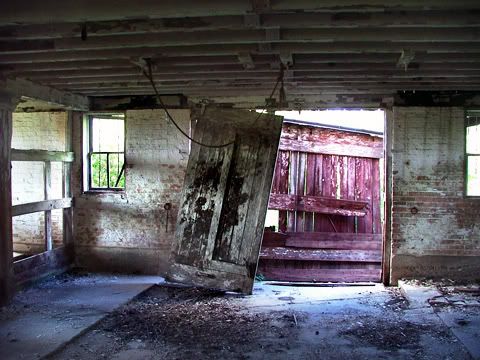
The old barn doors hang precariously off the tracks. It's been many years since the lower level has been used as a milking room. The cows were milked twice a day, once very early in the morning and once at night.

Today, as you drive the back roads in the early evening, you can watch the cows in a sinuous line, walking single file back to the barn. It's somewhat of an inside joke in the farming communities that dairy farmers can never take a vacation!

I remember many years ago that friends of ours who were dairy farmers made plans to attend a wedding in another county. They did the morning milking and arranged to have their sons take care of the evening chores, returning late that night. Everything went fairly well, except the cows were upset at the change in their routine, and since the farmer had been absent, replaced by his sons, they gave 1/2 the normal milk.

I've often wondered how dairy farmers fair in retirement, since they've worked the dawn to dusk schedule for many, many years.

Wednesday, September 07, 2005

cadillac


On a Saturday night in the rural midwest you can find a car race somewhere. The best entertainment of the evening is always the demolition derby.

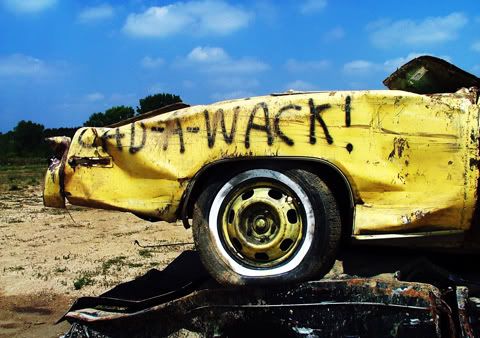
This Cad-a-wack is leftover from the derby at the county fair. Races run every Saturday night at Bob-Jo's Speedway in Sycamore, Illinois.

Great fun.

Tuesday, September 06, 2005

blue highways


Our modus operandi when traveling involves striking out from a base camp set up in a large city or town. We enjoy what the city has to offer, but also drive the "blue highways", aptly named by William Least Heat-Moon in his book with the same title. Blue highways are the lesser roads on the map, off the main highways and interstates.

In February I cruised out of Orlando and drove north on blue highways to find Marjorie Kinnan Rawlings home in Cross Creek, Florida. On this trip to Myrtle Beach we headed down the coast to revisit a small town found on a trip 2 years ago. The blue highway headed east into McClellanville, South Carolina, and curiousity demanded an update as to whether the place had been touched by development.

Thankfully, the answer is no.....for now. It is still a sleepy little southern town. There's hardly a human being to be seen, this trip only a gentleman mowing his lawn, protected from the sun by a large hat reminiscent of a tobacco farmer. It appears to be the town that time forgot.

The air is as still as the dead, but thankfully the oppressive heat has lifted and the only sound is the rhythm of cicadas in the trees, with an aria provided by the shrimp boat "Miss Alva", motoring back to the safe harbor behind the town.

Standing on the tiny main street of town, you can imagine Scout swinging on the tire swing suspended from a gigantic live oak. Your imagination allows you to believe that any moment Boo Radley will come sauntering around the corner.

Thank God there are still McClellanvilles and blue highways.